
This report was published April 7, 2026, and updated April 8 to reflect additional Q1 recall data released by NHTSA after the end of the quarter.
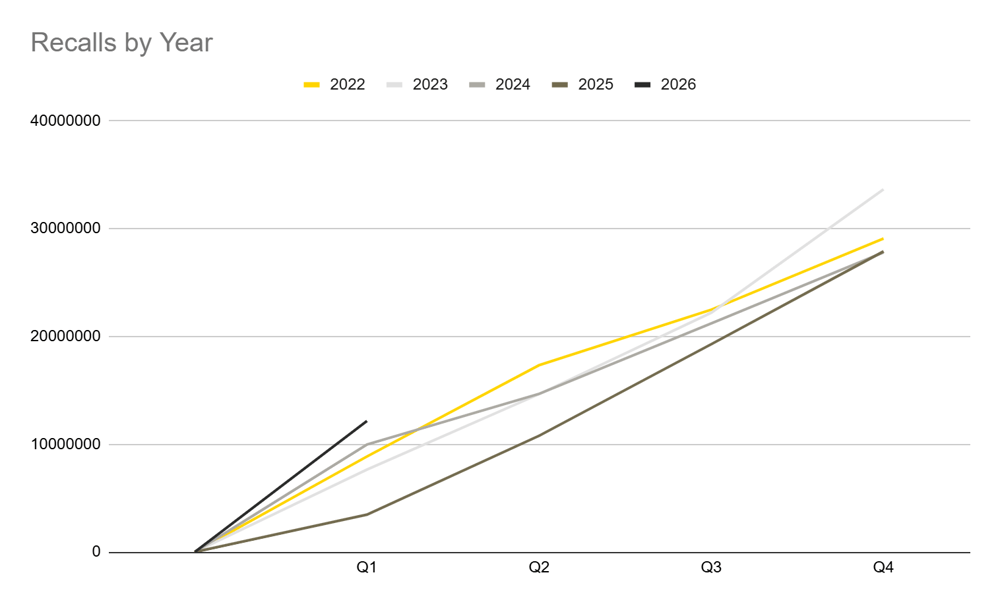
The BizzyCar Q1 2026 Recall Report provides an early look at how recall activity is evolving in the U.S. automotive industry as manufacturers continue to navigate increasingly complex vehicle systems. In contrast to a relatively low-volume Q1 2025, recall activity accelerated sharply to begin 2026, driven by a handful of large-scale campaigns.
This quarter reinforces a growing pattern: recall volume is becoming less predictable and more event-driven, with individual campaigns capable of reshaping the overall landscape in a matter of weeks. As vehicles become more reliant on interconnected software, electrical systems, and advanced safety features, the potential impact of a single defect has expanded significantly, often affecting multiple models, platforms, and model years at once.
This report highlights the brands, components, and campaigns that defined Q1 2026, while examining how increasing system complexity, large-scale recall events, and shifting repair methods are reshaping recall management for both manufacturers and dealerships.
Q1 2026 Recall Report Highlights
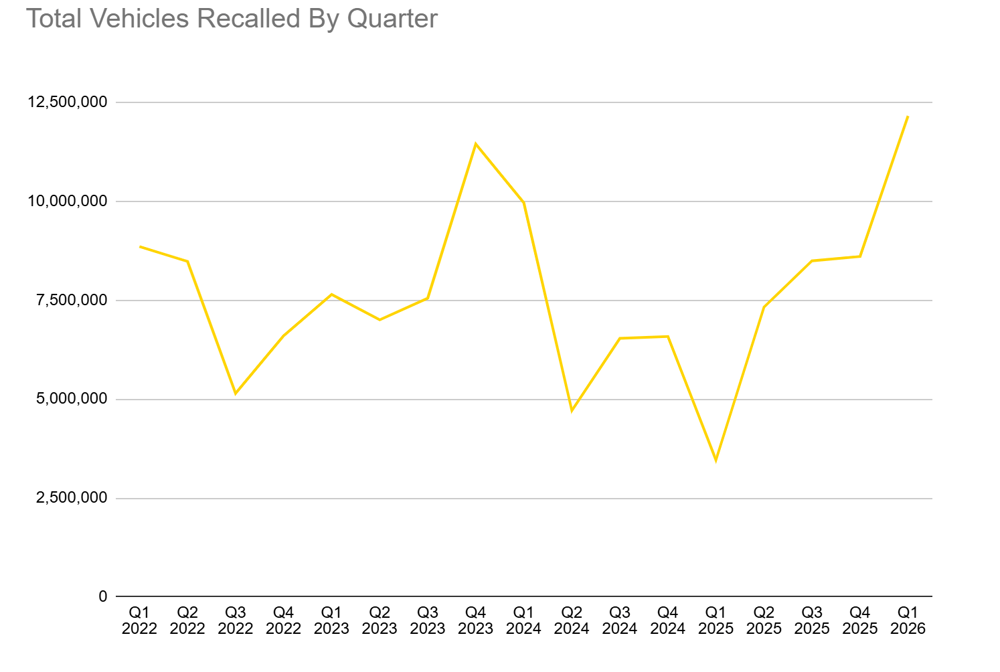
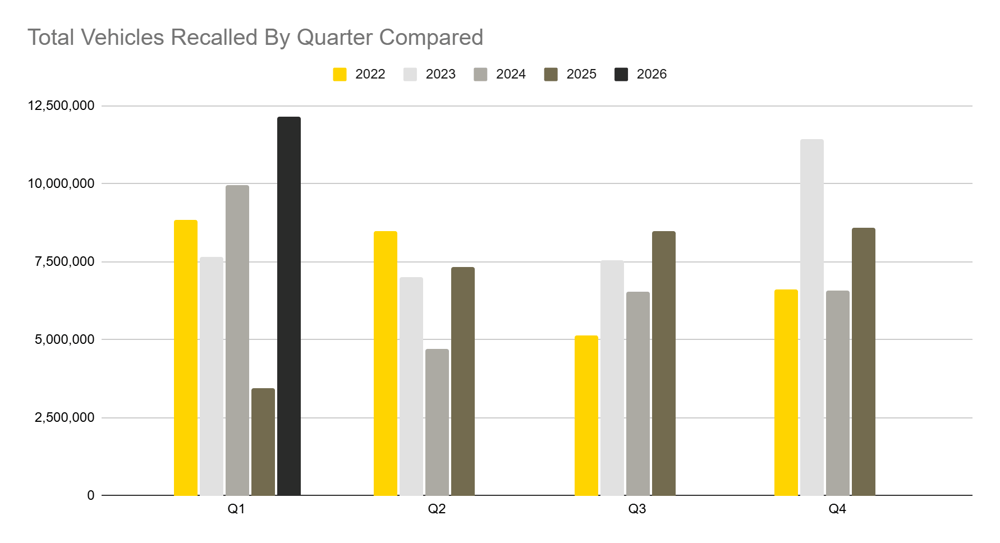
Q1 2026 saw approximately 12.1 million vehicles recalled, the highest single quarter total in recent years.
A Single Campaign Drove the Quarter
Ford’s 26C10 electrical system recall, impacting over 4.3 million vehicles and accounting for more than 35% of all vehicles recalled in Q1, is the single largest recall event since a 4.8 million vehicle Chrysler campaign in Q2 2018.
Ford Led by a Wide Margin
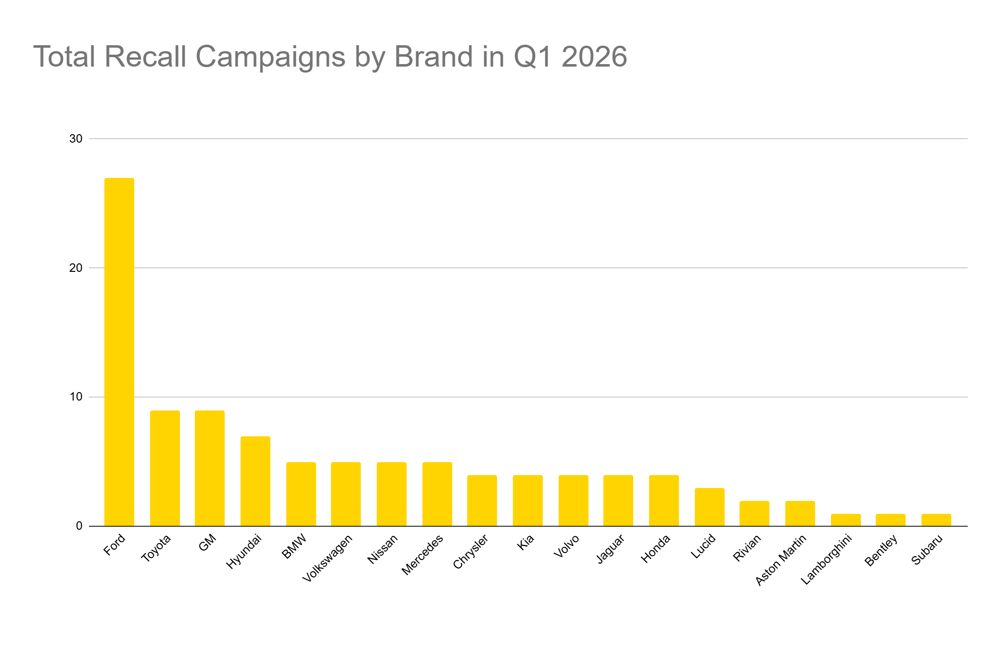
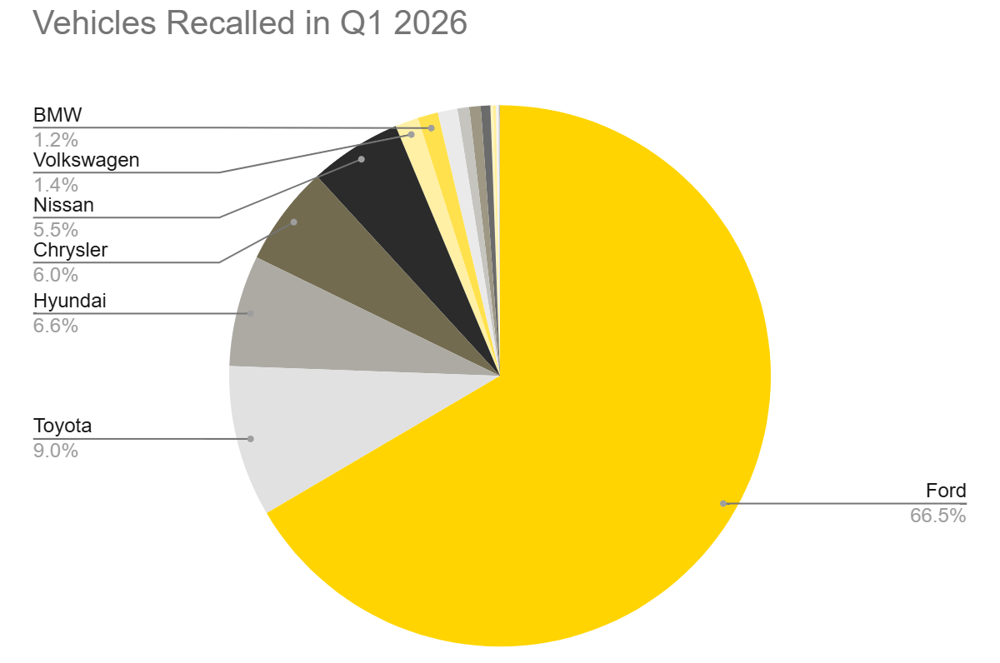
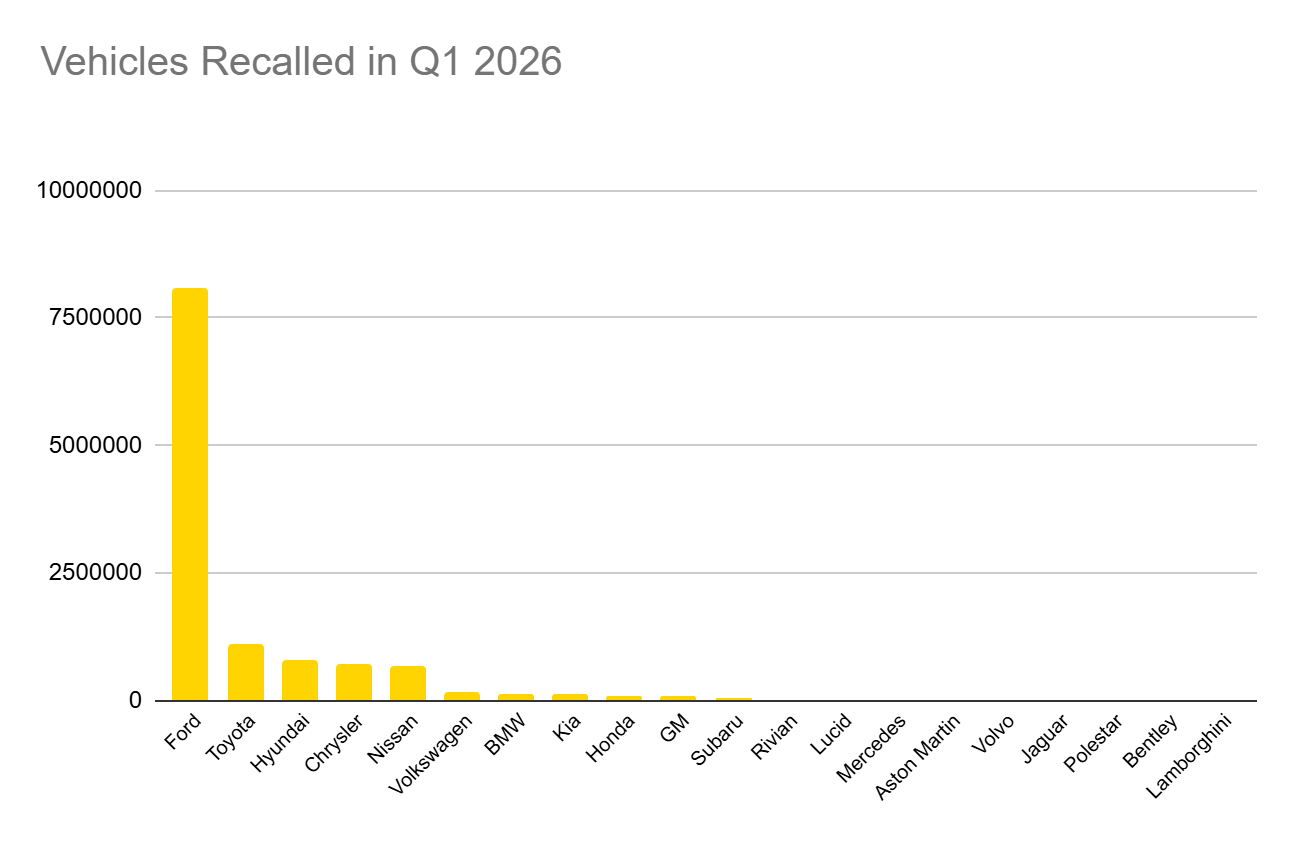
Ford recalled more than 8 million vehicles in Q1, representing roughly two-thirds of total recall volume and claiming the four largest recall campaigns of the quarter. Five manufacturers—Ford, Toyota (1.0M), Hyundai (806K), Chrysler (726K), and Nissan (669K)—together accounted for 93.7% of all vehicles recalled.
Electrical System Issues Dominated Q1
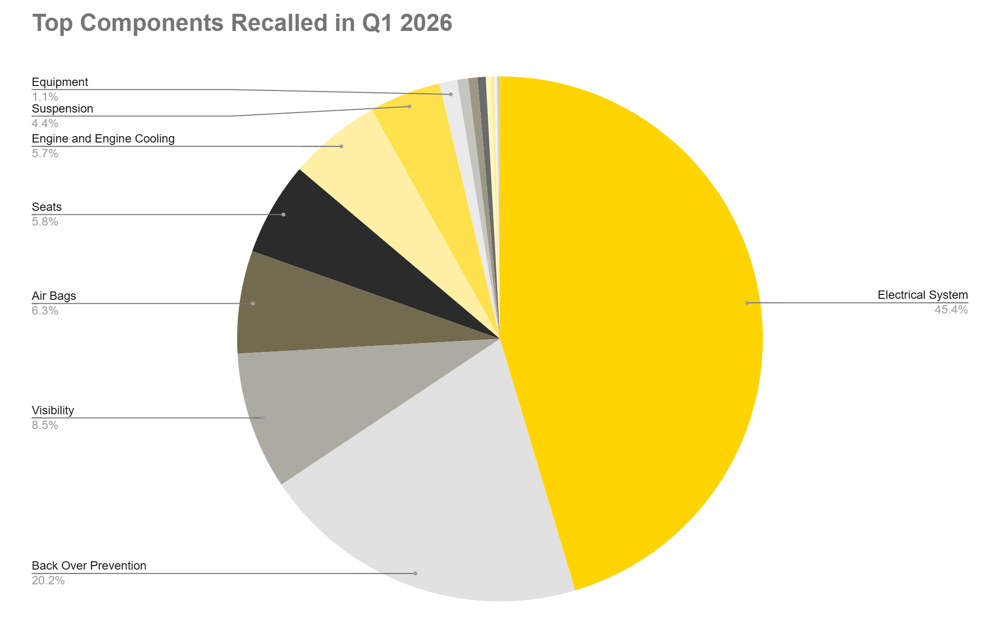
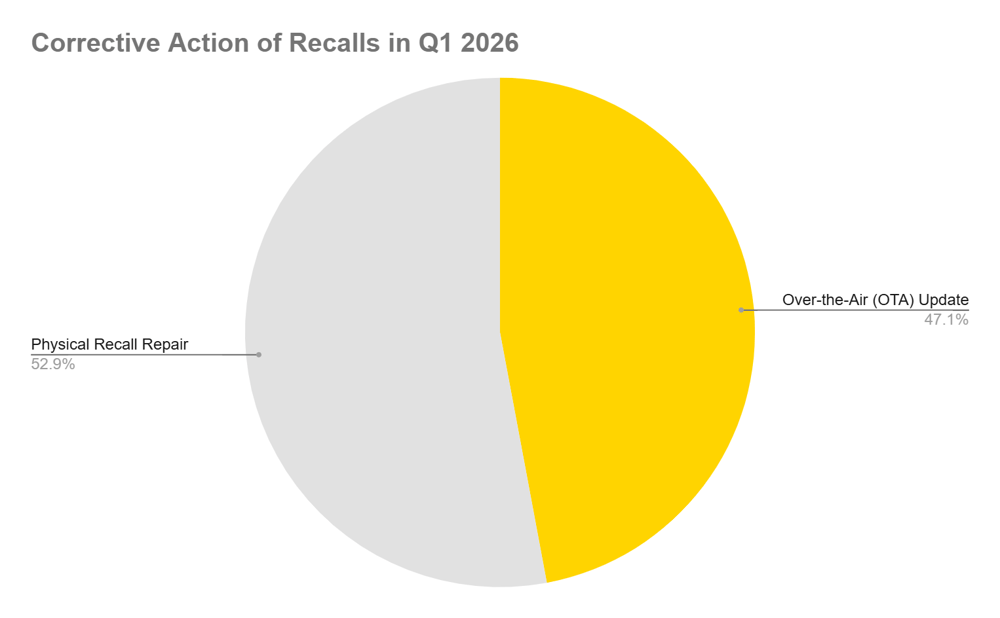
Electrical System recalls accounted for over 45% of all vehicles affected, driven largely by the single high-impact Ford campaign. Back Over Prevention followed at 20%, continuing a multi-quarter trend of camera and visibility-related defects. The Ford 26C10 recall’s over-the-air update spiked the share of OTA-eligible recalls from an average 15% in recent years to nearly 50% for Q1.
Recall Activity Is Increasingly Concentrated
While there were over 100 U.S. manufacturer vehicle recall campaigns in Q1, the top four accounted for more than half of all vehicles recalled, reinforcing the shift toward fewer, higher-impact recall events rather than evenly distributed activity.
BizzyCar Q1 2026 Recall Report
Total Recalls and Vehicles Affected
- Total Recalls Issued in Q1 2026: 103
- Total Vehicles Affected in Q1 2026: 12,154,289
Q1 2026 Recalls Issued by Brand
Ford Drives Record Recall Volume to Start 2026
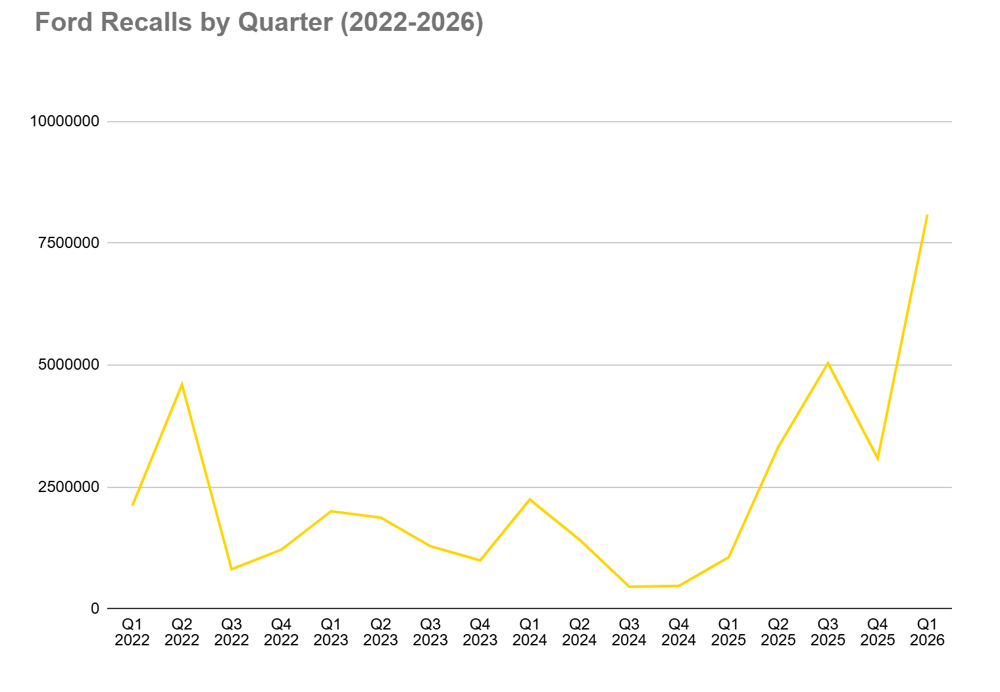
Ford opened 2026 as the clear leader in U.S. recall volume, responsible for the four largest individual campaigns and accounting for approximately two-thirds of all vehicles recalled in Q1. This marks one of the most concentrated quarterly shares in recent years, driven by a small number of high-impact campaigns affecting multiple models and platforms.
This level of concentration reinforces a key shift for dealerships: recall demand is becoming less predictable and more event-driven. Rather than a steady flow of smaller repairs, large campaigns can create sudden spikes in service volume, requiring faster identification, outreach, and scheduling to capture the opportunity.
Dealerships best positioned to respond quickly, communicate clearly, and deliver a seamless recall experience will be able to convert these high-volume events into long-term customer relationships and future service revenue.
Top Components Recalled in Q1 2026
10 Largest Recalls of Q1 2026
Q1 2026 Park Outside and Do Not Drive Advisories
Six recall campaigns, accounting for 97,774 vehicles, were categorized under heightened safety warnings this quarter.
Park Outside:
- Subaru (WRD-26): Fuel Cap May Leak Fuel (69,153 vehicles)
- Mercedes-Benz: High Voltage Battery May Catch Fire (11,895 vehicles)
- Volkswagen (93EW): High Voltage Battery May Catch Fire (670 vehicles)
- Nissan (R25F1): High Voltage Battery Modules May Short Circuit (51 vehicles)
- Volvo (R10355): High Voltage Battery Fire Risk (40 vehicles)
Do Not Drive:
- Ford (26C07): Loss of Brake Function/FMVSS 105 (15,965 vehicles)
OTA Updates in Q1 2026
A total of 5,719,817 vehicles, representing close to half of all vehicles recalled in Q1 2026, can be repaired via Over-the-Air (OTA) software updates.
Brands with OTA-eligible recalls in Q1 2026:
- Ford: 5,487,017 vehicles
- Hyundai: 125,528 vehicles
- Kia: 42,677 vehicles
- General Motors: 11,829 vehicles
- Lucid: 14,719 vehicles
- Jaguar: 2,278 vehicles
Over the past four years, approximately 15% of recalled vehicles have been eligible for OTA updates. While the 47% OTA rate in Q1 appears significant, it is largely driven by Ford’s 4.38 million vehicle 26C10 campaign, which accounted for more than three-quarters of all OTA-eligible recall volume this quarter.
In-Person Visits Still Matter in 2026
Despite a temporary spike in OTA-eligible recalls in Q1 2026, in-person service visits remain critical to the recall process and the broader fixed ops strategy. While certain software-related issues can be resolved remotely, most recall events still require inspection, validation, or follow-up work that brings vehicles into the dealership.
Even when OTA is used as part of the remedy, it often does not eliminate the need for customer engagement. Dealerships play a key role in confirming completion, addressing related concerns, and ensuring vehicles are fully compliant with safety standards.
In-person visits also continue to create opportunities that remote fixes cannot replicate:
- Vehicle Inspections: Technicians can identify emerging safety, wear, or maintenance issues before they become more costly problems.
- Service Revenue: Shop visits open the door to additional repairs, replacements, and recommended services.
- Customer Retention: A smooth recall experience builds trust and increases the likelihood of repeat visits.
- Sales Opportunities: Recall appointments often lead to conversations around trade-ins or vehicle upgrades.
- Future Service Planning: On-site visits make it easier to schedule upcoming maintenance and keep customers engaged long-term.
As recall activity becomes more concentrated and event-driven, the ability to convert recall volume into completed service visits remains a key differentiator for dealership performance.
BizzyCar Commentary: What’s Ahead
Q1 2026 highlights a continued shift in how recall activity is distributed across the automotive industry. While overall volume reached a multi-year high, the majority of activity was driven by a small number of large-scale campaigns rather than a broad increase across manufacturers. This reinforces a growing trend: recall activity is becoming less steady and more concentrated, with individual events capable of reshaping an entire quarter.
As vehicles become more complex and increasingly reliant on interconnected electrical and software systems, the impact of a single defect continues to expand, often affecting multiple models, platforms, and production years at once.
Q1 also illustrates how Over-the-Air (OTA) updates are evolving within the recall landscape. While OTA capabilities are growing, their impact can vary significantly depending on the nature of specific campaigns. Rather than replacing dealership involvement, OTA remains one part of a broader service process that still depends on inspection, validation, and customer engagement.
Looking ahead, dealerships should expect recall activity to remain uneven, with periods of stability interrupted by high-volume events. Success will depend on the ability to quickly identify affected vehicles, engage customers proactively, and convert recall opportunities into completed service visits.
BizzyCar Guidance for Dealers & Drivers
For Dealers
BizzyCar advises dealers that a fixed ops strategy centered on recalls drives meaningful service traffic and long-term customer retention. We also recognize that managing recalls manually takes considerable time, coordination, and follow-up. BizzyCar helps dealerships simplify recall outreach and scheduling by automating the process behind the scenes, from identifying eligible vehicles to engaging owners and booking appointments.
The result is a smoother customer experience and a more reliable workflow for fixed ops teams: fewer missed opportunities, less administrative burden, and more completed repairs with fewer internal resources.
For Drivers
BizzyCar reminds drivers to address open recalls promptly, not just for themselves, but for their family and everyone else they carry. Many drivers are unaware they have an open recall, and even when notified, scheduling a repair can be easy to delay. BizzyCar helps dealerships identify affected vehicles, reach out proactively, and make it easier for drivers to complete needed repairs. Safer vehicles make safer roads, and simpler scheduling helps more drivers follow through.
To check your vehicle for recalls, use the National Highway Traffic Safety Administration’s recall search tool.
BizzyCar’s Commitment
BizzyCar exists to turn recall volume into dealer opportunity through faster identification, smarter outreach, and more completed repairs. Every recall is a relationship waiting to happen. With vehicles only getting more complex, our smart platform ensures you stay ahead, transforming every recall and service visit into a stronger customer relationship.
About BizzyCar
BizzyCar is an AI-driven service and recall management platform for auto dealers. It leverages the most accurate recall data available to identify vehicles with open recalls, then uses artificial intelligence and deep DMS integration to engage owners via two-way SMS and proactively schedule recall repair appointments.
BizzyCar Service Engine expands your fixed ops outreach beyond recalls, helping dealerships book appointments for routine maintenance, first service visits, and previously declined work. In addition, BizzyCar supports mobile service operations by powering scheduling, routing, and customer communications, allowing dealerships to meet customers where they are for simpler repairs while preserving shop capacity for more complex work.
Schedule a BizzyCar demo today to see how your dealership can turn recall volume into completed service and long-term customer relationships.
All recall data used in this report is from the National Highway Traffic Safety Administration: https://datahub.transportation.gov/Automobiles/NHTSA-Recalls-by-Manufacturer/mu99-t4jn